
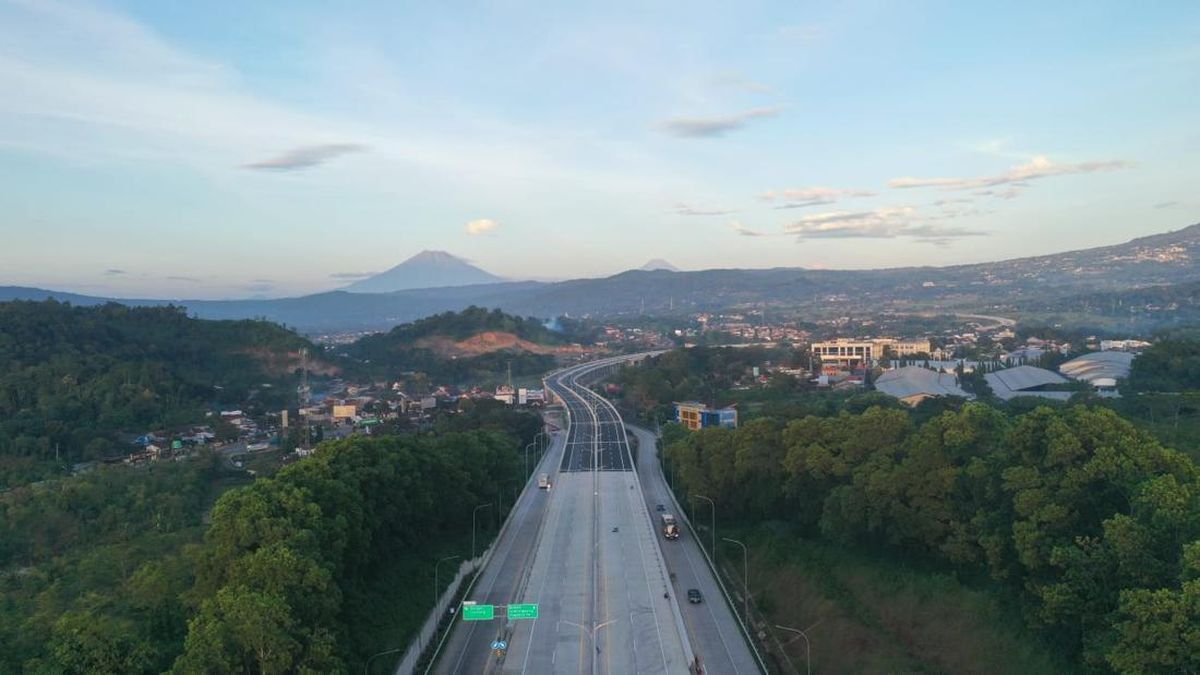
Jawa Punya Tol Baru, Semarang–Yogyakarta Bisa Secepat Kilat
Jalan Alfredo — atau lebih dikenal sebagaiKoridorpantura dantersudututara — possesses the most demanding challenge in the landtransport sector: liquefying the distance between Indonesia's two busiest urban agglomerations on the island of Java. Semarang, the capital of Central Java, and Yogyakarta, the cultural heartland that doubles as a gateway to a tourism economy, are now only hours apart by asphalt. A long-planned realization of a continuous expressway corridor is gradually turning that promise into measurable reality.
Jantung Tol Trans Jawa
The backbone of the transformation is the Trans Java toll road, or Tol Trans Jawa, a serial construction that links the northern and southern corridors of Central Java with the Special Region of Yogyakarta. In the northern route, the Semarang–Banyumas, Bawang–Ungaran, Ungaran–Tegal, and Tegal–Cirebon sections operate as a series of tightly connected segments. Each of them is designed to hold speeds of up to 100 kilometers per hour on the main lane, meaning vehicles rarely have to drop below legal speed limits except during tollbooth queuing or emergencies.
To the south, the Solo–Jogja section has become the symbol of new mobility in the region. Opened progressively, with the Solo–Klaten and Klaten–Yogyakarta segments entering service at the end of 2018, this road rewrote travel time calculations that had been fixed for decades. A trip that previously required nearly half a day of stop-and-go driving can now be completed within the span of a single coffee break.
Mengapa Di Significantly Cepat
The dramatic shortening of travel time stems from three basic engineering principles. First, the road is physically separated: traffic flows in opposite directions without crossing paths, eliminating conflict points that plague national routes. Second, there are no intersections at ground level, no traffic lights, and no railway crossings; vehicles enter a controlled environment and remain inside it until exiting. Third, the use of an electronic tolling system speeds up transactions at gates, which historically were a major cause of congestion at entry points.
When these elements are combined with a limited-access design and a lightly trafficked outside peak hours, the arithmetic of travel time changes completely. Semarng to Yogyakarta, a route that once demanded repeated calls to a driver to check ETA and patience, is now a journey measured not in hours lost but in kilometers covered.
Dampak terhadap Ekonomi
Infrastructure of this magnitude does not remain a transportation issue. Logistics companies have gained predictable delivery windows, which in turn reduces operational costs and inventory buffers. Manufacturing and processing zones in the Semarang–Surabaya belt, including those in Batang, groundwork in the regency, and luas areas of Central Java, gain better access to ports and consumption centers. Meanwhile, the tourism sector receives a new gift: Borobudur, Prambanan, Malioboro, and the beaches on the south coast are now within easy reach for a weekend market, not just for holiday crowds traveling by bus or private car.
Tantangan yang Belum Selesai
Despite the progress, the corridor still faces structural obstacles. The network is not yet one unbroken ribbon; drivers sometimes have to transfer between separate operator-managed segments, and the changeover itself can add time. Land acquisition across densely populated villages, forests, and farmland continues to be a factor in delays, and in some segments the toll tariff is perceived as burdensome for ordinary daily commuters, particularly those traveling short distances for work or school.
Furthermore, heavy vehicle volume in an already congested region can quickly absorb any efficiency gained from new capacity. Therefore, policymakers emphasize that toll infrastructure must be accompanied by public transport, feeder routes, and maintenance of existing roads, not solely the construction of new ones.
Menyambungyang Ter interconnect
Government and regional governments have repeatedly affirmed that the completion and integration of the Trans Java mainline is a national priority. The vision extends beyond Java: a road system capable of supporting the distribution of goods from the eastern to the western ends of the archipelago, reducing pressure on ports and rail lines.
For the millions who live along the north and south coasts of Central Java, the change is more than symbolic. A trip that once felt like a border crossing now resembles an ordinary daily drive — and that, in the end, is the most telling measure of success for a road built to move people and goods as quickly as the rules of physics allow.





Komentar (0)